
There is a specific, quiet kind of heartbreak that comes from realizing you are the lowest priority in the lives of the people who brought you into the world.
It isn’t a sudden, dramatic blowout fight. It doesn’t happen with screaming matches or slammed doors. It’s a slow, cold erosion of hope. It’s the realization that while you bend over backward to celebrate everyone else’s milestones, your own existence is treated as an afterthought—an inconvenient calendar entry that keeps slipping through the cracks.
For my older sister, Claire, my parents were a personal event planning committee.
When Claire turned twenty-five, my mother spent three months organizing a surprise garden party with fifty guests, custom floral arrangements, and a three-tiered artisan cake. When Claire got promoted at work, my father bought her a bottle of vintage champagne and hosted a family dinner at a steakhouse downtown.
For me? I was the reliable, low-maintenance younger son, Leo.
I was the kid who scored well in school without needing tutors, handled my own college applications, built my career in software engineering without asking for financial help, and quietly showed up whenever anyone in the family needed a favor.
And for five consecutive years, my parents completely, utterly forgot my birthday.
Year one was a “busy week at work.” Year two was “a mistake with the family calendar.” Year three was “your sister was having a rough time, so we got distracted.” Year four was a quick, apologetic text at 11:45 PM on the day of: “Oh sweetie, happy birthday! We lost track of time!”
When Year Five arrived, I didn’t cry. I didn’t throw a tantrum. I simply made a decision: if my presence in our family was invisible, my absence would be permanent.
Chapter 1: The Golden Child and the Ghost
To understand why Year Five was the breaking point, you have to understand the dynamic of the Vance household.
My sister, Claire, was three years older than me and consumed 90% of our parents’ emotional oxygen. Growing up, Claire’s life was an endless series of dramatic crises and high-stakes achievements. If Claire had a minor disagreement with a friend, my parents spent two hours at the dinner table talking her through it. If Claire landed an entry-level job, it was celebrated like a Nobel Prize win.
I, on the other hand, was expected to be fine.
- The Graduation Contrast: When Claire graduated from college, my parents booked a hotel suite, bought her a new professional wardrobe, and threw a lavish party. When I graduated with honors three years later, my parents showed up fifteen minutes late for the ceremony, took two blurry photos on my mom’s phone, and asked if we could go to a fast-casual diner because my dad was tired.
- The Favor Machine: Whenever my parents needed someone to set up their Wi-Fi, fix their TV, drive my grandmother to her medical appointments, or help them move heavy furniture, I was the first person they called. I always said yes.
- The One-Way Street: When I bought my first condo at twenty-six—a massive personal milestone I accomplished entirely on my own—my parents visited once for twenty minutes, commented on how hard parking was, and left.
I spent my entire twenties holding onto a childish hope: If I’m just a little more successful, if I’m just a little more helpful, if I’m just a better son, they’ll notice me.
I kept my calendar clear every year for my birthday, holding out hope that maybe, just maybe, this would be the year my mom would call me in the morning to ask what I wanted for dinner.
Chapter 2: The Fifth Strike
My 28th birthday fell on a Saturday in mid-October.
I had spent the week leading up to it working long hours at my engineering firm, but as the weekend approached, a small, stubborn part of my heart held out hope.
On Friday night, I bought groceries, cleaned my apartment, and made sure my phone was fully charged. I told myself that even if they didn’t throw a party, at least a Sunday family dinner or a heartfelt phone call was guaranteed.
Saturday morning arrived.
I woke up at 8:00 AM. Sunlight was streaming through my living room windows. I brewed a cup of coffee, sat on my sofa, and looked at my phone.
- 8:30 AM: A text from my college buddy, Mark: “Happy birthday, bro! Let’s grab drinks next week!”
- 9:15 AM: A text from my aunt: “Happy birthday, Leo! Hope your parents are taking you out for something delicious!”
- 10:00 AM: A notification from my bank offering birthday wishes.
Nothing from my mom. Nothing from my dad. Nothing from Claire.
By 2:00 PM, I decided to go for a long run in the park to clear my head. They’re probably just sleeping in, I lied to myself. They’ll call around dinner time.
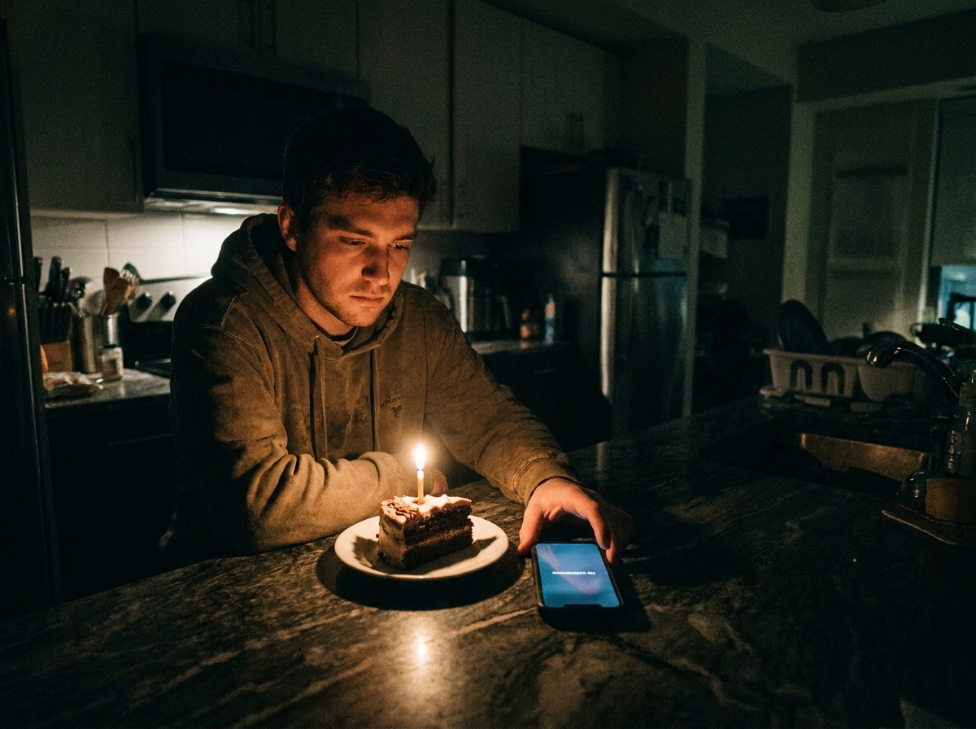
By 7:00 PM, the sun had set. My apartment was quiet. I sat at my kitchen counter with a slice of store-bought cake I had purchased for myself, staring at my silent phone screen.
At 9:30 PM, my phone finally buzzed on the counter. My heart gave a sudden, involuntary leap. I grabbed the phone, expecting to see a group call from my family.
It was a notification from our family WhatsApp group chat.
My mom had sent three photos of Claire’s new dog wearing a sweater, accompanied by the text:
“Look how adorable Cooper looks in his new winter coat! Claire brought him over for dinner tonight. Hope everyone is having a great weekend!”
My dad replied two minutes later:
“He’s a good boy! Great night!”
They weren’t busy. They weren’t trapped at work. They hadn’t suffered an emergency.
They were sitting in the dining room of my childhood home, eating a home-cooked dinner with my sister, posting photos of a dog in a sweater, completely oblivious to the fact that it was the birthday of their only son.
For the fifth year in a row, I didn’t exist.
I sat at my counter in the dark, looking at the glowing phone screen. I didn’t feel angry. I didn’t feel the burning resentment that had consumed me in previous years.
Instead, a profound, peaceful stillness washed over me. The illusion finally broke. The rope I had been pulling for twenty-eight years snapped, and for the first time in my life, I just let go.
I didn’t reply to the chat. I blew out the single birthday candle sitting on my slice of cake, ate it in silence, and went to bed.
Chapter 3: The Quiet Withdrawal
The true test of boundaries isn’t how loudly you yell; it’s how quietly you step away.
Over the next few months, I began my silent withdrawal. I didn’t make a big dramatic announcement. I didn’t block their numbers. I simply stopped initiating contact, stopped offering unprompted help, and stopped treating my childhood family as my primary emotional anchor.
- The Tech Support Calls: When my dad texted two weeks later asking why his laptop printer wasn’t connecting, I didn’t drive thirty minutes to his house to fix it. I replied three hours later: “Hey Dad, busy with work projects right now! You can call Geek Squad or check the user manual online.”
- The Holiday Strategy: When Thanksgiving approached, my mom called to ask what time I would be arriving on Thursday morning to help set up tables and chairs.
“I won’t be able to make it this year, Mom,” I said smoothly over the line.
A long pause hung on the phone. “What do you mean, Leo? It’s Thanksgiving. Family always comes home for Thanksgiving.”
“I’m spending the holiday with a few friends this year,” I replied, keeping my voice entirely devoid of anger. “Have a great dinner with Claire!”
“Well… that’s very odd,” my mom sniffed, clearly annoyed by the inconvenience. “You always help your father with the extra chairs. But fine, do whatever you want.”
She hung up without asking how I was doing, how my work was going, or why I was suddenly unavailable. To her, my absence was merely a minor disruption in her event logistics.
Chapter 4: The Christmas Confrontation
The real storm broke six months later, during Christmas week.
For five years, I had spent every Christmas Eve driving through snowstorms to my parents’ house, spending three days running errands for them, wrapping Claire’s presents, and playing the background character in their festive family theater.
This year, I booked a solo trip to a quiet cabin in the mountains of Vermont.
On December 23rd, my mom called my phone three times while I was packing my bag. I finally picked up on the fourth ring.
“Leo! Where on earth are you?!” my mom demanded, her voice frantic and sharp. “Your sister and her fiancé are arriving in two hours! We need you to drop off the extra grocery order and help dad set up the guest room bedroom frame! We’ve been waiting for you all morning!”
I zipped my duffel bag closed and leaned against my bedframe.
“I’m not coming home for Christmas, Mom,” I said quietly.
“WHAT?!” she gasped, her voice echoing through the speaker. “What do you mean you’re not coming home?! It’s Christmas Eve tomorrow! You always come home! What is wrong with you lately?!”
“Nothing is wrong with me, Mom,” I said, my voice steady, calm, and measured. “I’m taking a vacation.”
“A vacation during Christmas?!” she screeched. “Leo, this is completely selfish! We are your family! You are ruining our holiday plans! How could you be so cold and distant?”
The irony of her calling me “cold and distant” was so stark that I almost laughed out loud.
“Mom,” I said softly, taking a deep breath. “Do you know what day it was two months ago?”
“What day?” she asked, her tone shifting into a confused, defensive edge. “Two months ago? What does that have to do with Christmas?”
“October 18th,” I said.
Silence on the line.
“October 18th…” my mom repeated slowly. “Was that… the day your father had his dental appointment?”
“It was my 28th birthday,” I said.
The silence on the other end of the line became deafening. I could hear the faint sound of her breathing over the speaker.
“You, Dad, and Claire forgot my birthday this year,” I continued, keeping my voice at a conversational level. “Just like you forgot it when I turned twenty-seven. And twenty-six. And twenty-five. And twenty-four.”
“Leo… sweetie…” my mom stammered, her voice suddenly losing all its loud, authoritative edge. “We… we didn’t forget! We were just… we were so overwhelmed that week with Claire’s engagement news, and—”
“You posted photos of Claire’s dog in the group chat at 9:30 PM on my birthday, Mom,” I interrupted gently. “You weren’t overwhelmed. You just didn’t care.”
“Leo, that’s not fair!” she cried out, her voice cracking with defensiveness. “You know how much we love you! You’ve always been so independent, so strong! We just assumed you didn’t care about big birthday celebrations! You never made a fuss!”
“I didn’t make a fuss because I shouldn’t have to beg my own parents to remember the day I was born,” I said. “For five years, I watched you throw parties for Claire while treating my presence like a utility bill—something you only notice when it’s missing.”
“Leo, please,” my mom pleaded, real distress finally creeping into her tone. “Come home for Christmas. We can celebrate your birthday this weekend! I’ll bake a cake! We can make it up to you!”
“No, Mom,” I said, looking out the window at the snow falling softly over the city. “You can’t make up five years of neglect with a reactionary Christmas cake. I don’t want a cake. I just wanted a family that saw me.”
“So… you’re just abandoning us?” she asked, tears choking her voice.
“I’m not abandoning anyone,” I said. “I’m just matching your energy. For five years, I’ve been an afterthought to you. Now, I’m making this family an afterthought to me.”
“Leo—”
“Merry Christmas, Mom. I hope you guys have a great holiday with Claire.”
I hung up the phone.
Chapter 5: The Freedom of Absence
I spent Christmas Eve sitting by a roaring fireplace in my Vermont cabin, sipping hot spiced cider and reading a novel while the snow fell softly outside.
For the first time in my adult life, my chest didn’t feel tight with unspoken resentment. I didn’t feel the anxious weight of trying to prove my worth to people who were blind to my value.
Over the next few months, my family attempted a series of desperate, clumsy attempts to pull me back into the fold:
- The Guilt Trips: My father called me three weeks after Christmas, offering a awkward, defensive speech about how “parents aren’t perfect” and how I was being “overly sensitive about minor calendar dates.” I listened politely, told him I loved him, and declined his invitation to Sunday dinner.
- The Sister’s Intervention: Claire texted me a long paragraph complaining about how I was “stressing Mom out” and making family events uncomfortable. I replied: “Claire, I’m glad you have a great relationship with Mom and Dad. I hope you continue to enjoy it.” She didn’t text back.
- The Shift in Dynamic: When they realized guilt trips and anger wouldn’t work, my parents finally realized the truth: they had lost their leverage. I didn’t depend on them financially, emotionally, or socially. The only thing keeping me in their lives was my willingness to show up—and that willingness had run out.
A year after I stopped coming home, my 29th birthday rolled around.
At 7:00 AM, a massive floral basket and a box of high-end bakery treats arrived at my apartment door, accompanied by a long, handwritten letter from my mother apologizing for years of taking me for granted.
I read the letter. I appreciated the gesture. I even texted her a polite: “Thank you for the flowers and the sweet note, Mom. I appreciate it.”
But I didn’t rush back home. I didn’t erase the boundaries I had built.
Because I had learned a fundamental truth about self-respect: An apology that only comes after you withhold your presence is an apology driven by loss, not understanding.